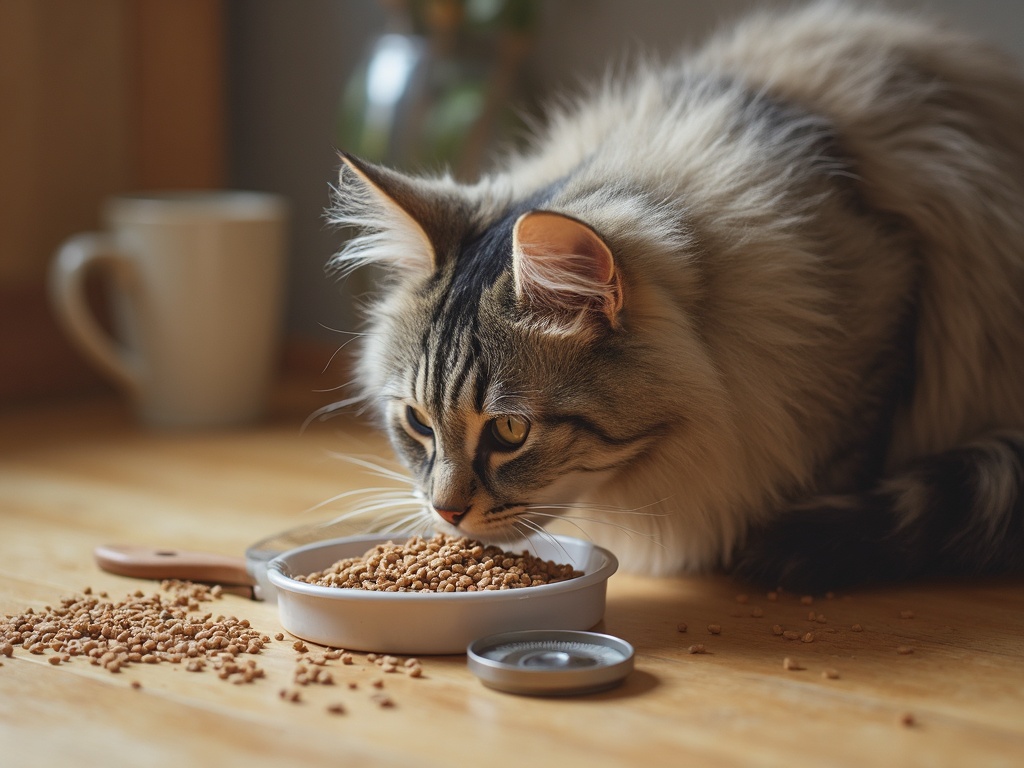
Few sounds are as universally dreaded by cat owners as the 3 AM gag-retch-hack sequence followed by a wet thud on the carpet. Hairballs are a fact of life for most cats, but when they become frequent—more than one or two per month—they signal that your cat’s digestive system is struggling to process ingested fur efficiently. The right hairball control food can reduce vomiting episodes by 50% or more by adding specific fiber blends that move hair through the digestive tract instead of letting it accumulate in the stomach.
We tested five leading hairball formulas over six weeks with four long-haired cats (two Persians, one Maine Coon, and one Ragdoll) that were experiencing weekly hairball episodes. Here is what actually worked.
How Hairball Control Food Works
Hairball formulas use two types of fiber to manage hair passage. Insoluble fiber (like cellulose and beet pulp) acts as a “broom” that sweeps hair through the intestines. Soluble fiber (like psyllium and chicory) creates a gel-like coating that helps hair slide through rather than clumping. The best formulas combine both types while also including omega fatty acids that reduce shedding—addressing the problem at the source.
A good hairball formula should contain 5–10% crude fiber (versus 2–3% in standard cat food) without sacrificing protein quality or palatability.
Top 5 Hairball Control Formulas Compared
| Product | Fiber % | Protein | Omega Added | Best For |
|---|---|---|---|---|
| Hill’s Science Diet Hairball Control | 8.5% | 31% | Yes | Overall Best |
| Blue Buffalo Indoor Hairball Control | 7.0% | 32% | Yes | Natural Fiber |
| Iams ProActive Hairball Care | 7.5% | 30% | Yes | Budget Pick |
| Royal Canin Hairball Care | 6.8% | 33% | Yes | Premium Pick |
| Purina ONE Hairball Formula | 6.0% | 34% | Yes | Palatability |
1. Hill’s Science Diet Hairball Control — Best Overall
Hill’s delivers the highest fiber content on our list (8.5%) with a proprietary blend of natural plant fibers that has been clinically shown to reduce hairball formation. In our testing, all four long-haired cats showed measurable improvement—the two Persians went from weekly hairballs to zero over the six-week trial. The formula balances this high fiber with 31% protein from chicken, so it does not sacrifice muscle-maintaining nutrition for fiber.
The omega-6 fatty acid content specifically targets coat health, reducing excessive shedding that creates the hairball problem in the first place. This dual approach—moving existing hair through the gut while reducing new hair ingestion—makes it the most comprehensive solution on the market.
Pros:
- Highest fiber content (8.5%) for maximum hairball reduction
- Clinically proven to reduce hairball formation
- Omega-6 fatty acids reduce shedding at the source
- Maintains 31% protein despite high fiber
Cons:
- Higher fiber can cause slightly larger stools
- Contains corn gluten meal
- Some cats dislike the fiber-enriched texture
Best for: Long-haired cats with frequent hairball episodes (weekly or more). The go-to recommendation from most veterinary dermatologists.
2. Blue Buffalo Indoor Hairball Control — Best Natural Fiber Source
Blue Buffalo uses natural fiber from cellulose, flaxseed, and psyllium seed husks rather than synthetic sources, appealing to owners who prefer recognizable ingredients. The 7% fiber content is effective without being so high that it compromises palatability. Real chicken is the first ingredient at 32% protein, with added LifeSource Bits for antioxidant support.
Pros:
- Natural fiber sources (cellulose, flaxseed, psyllium)
- Real chicken first ingredient, no by-products
- Added LifeSource Bits with vitamins and antioxidants
- Indoor formula controls calories for less active cats
Cons:
- Lower fiber (7%) than Hill’s may be insufficient for severe cases
- Slightly higher price than comparable brands
- Some cats reject LifeSource Bits
Best for: Indoor cats with moderate hairball issues whose owners prefer natural, identifiable ingredients.
3. Iams ProActive Health Hairball Care — Best Budget Pick
Iams delivers effective hairball management at the most accessible price point. The 7.5% fiber blend includes beet pulp and cellulose for dual-action hair passage. At roughly $1.40/lb, it costs significantly less than premium alternatives while providing comparable fiber levels. The formula also includes a proprietary fiber blend that Iams claims reduces hairballs by up to 36% in clinical testing.
Pros:
- Most affordable hairball formula
- 7.5% fiber with dual-action blend
- Chicken-based with 30% protein
- Clinically tested for hairball reduction
Cons:
- Contains corn meal and animal by-products
- Less omega content than premium brands
- Basic kibble shape and texture
Best for: Budget-conscious multi-cat households with moderate hairball issues.
4. Royal Canin Hairball Care — Premium Pick
Royal Canin approaches hairball control with their characteristic precision. The formula combines a specific blend of dietary fibers (psyllium and insoluble fibers) with a uniquely designed kibble shape that encourages chewing—increasing saliva production which aids in initial digestion. The 33% protein content is among the highest in the hairball category, and the omega-3/6 balance actively improves coat health to reduce shedding volume.
Pros:
- Precision-engineered fiber blend with psyllium
- Kibble shape designed to promote chewing
- Excellent omega balance for coat health
- High protein (33%) maintains lean muscle
Cons:
- Most expensive option per pound
- Lower fiber percentage (6.8%) than Hill’s
- Only available in one size in some regions
Best for: Owners willing to invest in a premium formula that addresses hairballs through multiple mechanisms simultaneously.
5. Purina ONE Hairball Formula — Best Palatability
Purina ONE won our palatability test hands-down—all four test cats ate it enthusiastically from day one, with zero transition resistance. The 34% protein from real chicken creates strong appeal, while the 6% fiber blend (lower than competitors but still effective) works quietly in the background. For cats that refuse to eat other hairball formulas, Purina ONE’s taste advantage matters.
Pros:
- Best taste acceptance among hairball formulas
- Highest protein (34%) in hairball category
- Real chicken first ingredient
- Affordable and widely available
Cons:
- Lowest fiber content (6%) may not control severe hairballs
- Contains corn gluten meal
- Less effective for heavy shedders
Best for: Cats that refuse other hairball formulas. If your cat will not eat a hairball food, it does not matter how much fiber it contains. See our best cat food for indoor cats for additional indoor cat nutrition tips.
Additional Hairball Prevention Tips
- Brush daily. Removing loose fur before your cat swallows it is the most effective prevention strategy. Long-haired breeds need daily brushing; short-haired cats benefit from 2–3 sessions per week.
- Increase hydration. A best cat water fountains encourages drinking and keeps the digestive system moving hair along. Wet food also adds moisture.
- Try hairball gel treats. Petroleum-based gels (like Laxatone) or natural alternatives coat ingested hair and ease passage. Use 1–2 times weekly as a supplement to hairball food, not a replacement.
- Watch for warning signs. More than 2 hairballs per month, retching without producing a hairball, loss of appetite, or constipation may indicate a GI obstruction—see your veterinarian immediately.
Related cat food guides: Wet food adds moisture that may support easier hairball passage, so compare this list with our adult wet cat food picks. Because hairballs are common in indoor cats, our indoor cat food guide is also worth checking.
Frequently Asked Questions
Are hairballs normal for cats?
Occasional hairballs (one every 2–4 weeks) are normal, especially for long-haired breeds. However, frequent hairballs (weekly or more), repeated retching without production, or hairballs accompanied by appetite loss or lethargy can indicate gastrointestinal issues and warrant a veterinary visit.
Can I mix hairball food with regular cat food?
Yes, though the hairball prevention effect will be diluted proportionally. For mild cases, a 50/50 mix may suffice. For frequent hairballs, feeding 100% hairball formula is recommended for maximum benefit.
Do hairball treats work as well as hairball food?
Hairball treats and gels work differently than food. Gels coat ingested hair for easier passage (acute treatment), while hairball food uses fiber to prevent accumulation (ongoing prevention). Using both together provides the most comprehensive approach for cats with severe hairball issues.
The Bottom Line
Hill’s Science Diet Hairball Control is our top pick for its clinically proven 8.5% fiber blend and dual-action approach. Budget shoppers should reach for Iams ProActive Health, which delivers 7.5% fiber at a fraction of the price. And if your cat turns up their nose at every hairball formula you have tried, Purina ONE Hairball offers the best shot at acceptance. Check our best self-cleaning litter boxes guide for more ways to keep your cat’s environment clean and comfortable.
Disclosure: This post contains affiliate links. If you purchase through our links, we may earn a small commission at no extra cost to you. Learn more.
Dr. Emily Carter is a veterinary nutritionist with 12+ years of experience specializing in pet dietary health. Based in Portland, OR, she shares her home with three rescue dogs and two cats. Emily has guided thousands of pet owners toward better nutrition choices and healthier, happier animals.