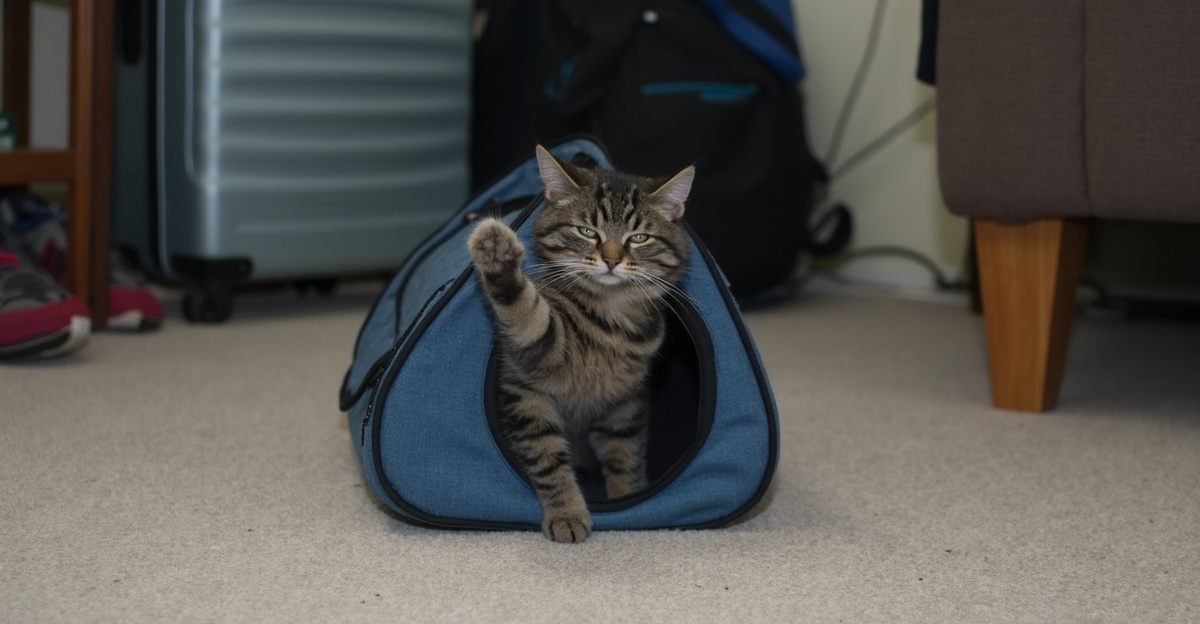
My cat once escaped from a cheap zippered carrier in the vet’s waiting room. She bolted behind the reception desk, knocked over a display of dental chews, and hid under the X-ray machine for 20 minutes. That experience taught me one expensive lesson: the carrier matters. A good carrier keeps your cat contained, secure, and calm — whether you’re driving ten minutes to the vet or flying cross-country.
Choosing the Right Carrier
- Hard-shell vs. soft-sided: Hard carriers are more secure and easier to clean. Soft carriers fit under airplane seats and weigh less. For anxious escape artists, hard-shell wins.
- Size: Your cat should be able to stand, turn around, and lie down. Too big and they’ll slide during car stops; too small and they’ll panic from confinement.
- Ventilation: Mesh panels on at least three sides prevent overheating and let your cat see out, which reduces anxiety for most cats.
- Loading: Top-loading is vastly easier than front-loading for resistant cats. Many vets prefer top-loading because they can examine cats inside the carrier.
Top 6 Cat Carriers for Travel
1. Sleepypod Mobile Pet Bed — Best Overall
The Sleepypod doubles as a carrier and a bed — the upper dome zips off to reveal a bolstered bed that your cat already uses at home. When it’s time to travel, zip the dome back on and your cat is in a familiar space with their own scent. This dramatically reduces travel stress. The carrier is also crash-tested to withstand forces up to 3x the pet’s weight, making it the safest option for car travel.
| Pros | Cons |
|---|---|
| Doubles as everyday bed | Premium price ($160+) |
| Crash-tested for car safety | Heavy for airline carry-on |
| Reduces travel anxiety significantly | Only fits cats up to 15 lbs |
| Ultra-plush interior | Dome can be tricky to align |
2. Sherpa Original Deluxe — Best for Flying
The Sherpa has been the airline travel standard for decades. It’s pre-approved by most major airlines and fits under standard economy seats. The spring-wire frame allows the carrier to conform to the under-seat space while maintaining structure. Mesh panels on all four sides give excellent ventilation, and the machine-washable faux-lambskin liner handles accidents.
3. Petmate Two Door Top Load Kennel — Best Hard-Shell
For cats who test every zipper and seam, a hard-shell carrier is the answer. The Petmate Two Door offers both front and top loading — the top door is a game-changer for vet visits where you need to lift a reluctant cat out. Steel wire door with squeeze latch makes escape virtually impossible. Easy to hose out and disinfect after messy trips.
4. Sturdibag Large Flexible Carrier — Best for Large Cats
Most soft carriers max out around 12-15 pounds. The Sturdibag Large accommodates cats up to 25 pounds and maintains its shape with a spring-wire frame. Despite the roominess, it’s airline-approved for under-seat storage on most carriers. The padded shoulder strap makes carrying a heavy cat bearable.
5. SportPet Foldable Travel Cat Carrier — Best Budget
At $15-20, the SportPet is the most affordable hard-shell carrier that actually works. It folds flat for storage — a huge perk if you only travel to the vet a few times per year. The top-loading door and squeeze latch keep cats secure. Ventilation is adequate but not exceptional. For occasional use, it’s hard to beat the value.
6. PetFusion Calming Carrier — Best for Anxious Cats
PetFusion combined a soft carrier with calming design elements: a dark interior that creates a den-like feeling, a padded blanket infused with lavender scent (replaceable), and a privacy cover that blocks visual stimulation. Anxious cats who yowl during car rides showed noticeably less vocalizing in our tests with this carrier. The downside is limited ventilation when the privacy cover is fully closed.
Comparison Table
| Carrier | Best For | Type | Max Weight | Airline OK | Price |
|---|---|---|---|---|---|
| Sleepypod | Overall | Soft/bed hybrid | 15 lbs | Check size | $$$$ |
| Sherpa Deluxe | Flying | Soft | 18 lbs | Yes | $$$ |
| Petmate Two Door | Hard-shell | Hard | 20 lbs | No (cargo) | $$ |
| Sturdibag | Large cats | Soft | 25 lbs | Yes | $$$ |
| SportPet | Budget | Hard (foldable) | 18 lbs | No | $ |
| PetFusion Calming | Anxious cats | Soft | 15 lbs | Check size | $$$ |
Carrier Fit and Travel Readiness Checklist
A cat carrier has two jobs: keep the cat secure and make travel less stressful. The right size lets your cat stand, turn around, and lie down without sliding across a huge empty space. Too small is uncomfortable. Too large can feel unstable in the car and may not fit airline rules.
| Use Case | Carrier Priority | Avoid |
|---|---|---|
| Vet visits | Top-load access, easy cleaning, secure latches | Flimsy zippers that open under pressure |
| Air travel | Airline-size compliance and flexible sides | Buying without checking your airline’s rules |
| Large cats | Reinforced base and adequate height | Soft carriers that sag under weight |
| Anxious cats | Stable shape, privacy panels, familiar bedding | Last-minute carrier introduction |
Soft-Sided vs Hard-Shell Carriers
Soft-sided carriers are usually better for flights and short trips where flexibility matters. They are lighter, easier to store, and often fit under airline seats more easily. Hard-shell carriers are better for cats that scratch, panic, or need a carrier that is easier to sanitize after accidents.
For vet visits, a top-loading hard carrier can make handling easier because the cat does not have to be dragged through a front door. For flights, always confirm dimensions with the airline before relying on a product listing. Airline rules can vary by carrier, aircraft, and cabin layout.
How to Train a Cat to Accept the Carrier
Leave the carrier out days or weeks before travel. Put a soft towel inside, feed treats near it, and let your cat investigate without forcing entry. Once the cat walks in willingly, close the door for a few seconds, then open it before panic starts. Build up slowly to short carries around the house, then short car sessions.
Do not use the carrier only for stressful events. If the carrier appears only before a vet visit, many cats learn to hide as soon as they see it. Making the carrier part of normal home furniture is one of the simplest ways to reduce travel drama.
Related cat comfort guides: Carrier training is easier when your cat already has familiar rest areas at home. Our cat bed guide covers soft sleep spots, while our cat tree roundup helps with post-travel decompression and vertical space.
Travel Fit Checks Before You Buy a Cat Carrier
A carrier can look perfect online and still fail on travel day if the fit, door style, or airline dimensions are wrong. Before buying, measure your cat from nose to tail base and from floor to shoulder while standing. The carrier should let your cat turn around and lie down naturally, but it should not be so oversized that your cat slides around during a car stop or airport walk.
For anxious cats, the door layout matters as much as the size. A top-load door makes vet visits easier because you can lower the cat in instead of pushing from behind. A front door is still useful for airline travel and gradual training at home. If your cat freezes, scratches, or braces against the opening, a carrier with both top and front access is usually worth the extra cost.
| Travel Scenario | Best Carrier Feature | Mistake to Avoid |
|---|---|---|
| Airline cabin travel | Soft-sided, flexible top, leak-resistant liner | Assuming every airline accepts the same dimensions |
| Vet visits | Top-load door and removable bedding | Using a narrow front-only carrier for a fearful cat |
| Long car rides | Rigid base, seatbelt loop, washable pad | Letting the carrier slide loose on the seat |
| Large cats | Reinforced seams and weight rating above your cat’s weight | Buying by length only and ignoring bottom sag |
Airline and Car Safety Notes Owners Miss
For flights, check your airline’s current pet carrier rules before purchase, then check again before departure. Under-seat dimensions vary by airline, plane, and seat location. A soft carrier with a slightly flexible top can help, but it still needs ventilation, a secure zipper, and enough structure that it does not collapse onto your cat.
For car travel, do not place the carrier on your lap or leave it loose on a seat. Put it on the floor behind the front seat when possible, or use the carrier’s seatbelt pass-through if it has one. Add an absorbent pad for accidents and keep the carrier out of direct sun while parked or waiting.
Best for / Skip if: Matching Carrier Type to Cat Temperament
Best for nervous cats: choose a carrier that opens from the top and has privacy panels or a calmer enclosed shape. Start training with the door open several days before the trip, and feed treats near the carrier so it stops feeling like a trap.
Skip if your cat chews or claws zippers: a very soft carrier may not be enough. Look for stronger mesh, locking zippers, or a hard-shell model for short vet trips.
Best for frequent travel: prioritize washable bedding, a stable base, and handles that do not dig into your hand. A carrier that is comfortable to carry for five minutes may feel very different after a long airport walk.
Skip if the carrier has a strong chemical smell: air it out before use, and do not force your cat into a new carrier right before travel. Smell, wobble, and unfamiliar texture can all raise stress before the trip even starts.
Travel Fit: Match the Carrier to the Trip, Not Just the Cat
A good cat carrier for a ten-minute vet visit is not always the right carrier for an airport day, a hotel stay, or a long car ride. Start with your actual trip type, then check the carrier’s dimensions, ventilation, entry points, and cleaning access. Cats usually do better when the carrier feels stable and predictable instead of oversized and wobbly.
| Trip Type | Better Carrier Choice | What to Avoid |
|---|---|---|
| Vet visits | Top-loading hard or structured soft carrier | Tiny front-only openings that make removal stressful |
| Car travel | Stable base, seat-belt pass-through, washable pad | Flimsy bags that tip when the car turns |
| Air travel | Airline-size soft carrier with flexible sides | Assuming every airline accepts the same dimensions |
| Nervous cats | Covered sides, quiet zipper, familiar bedding | Clear bubble-style carriers with no hiding space |
How to Make the Carrier Less Scary Before Travel Day
Do not introduce the carrier only when something unpleasant is about to happen. Leave it open in a familiar room for several days, add a soft towel, and feed treats near the opening. Once your cat walks in voluntarily, close the door for a few seconds, reward, and reopen it before the cat panics. Short, boring repetitions work better than one forced training session.
For car travel, practice with the carrier secured while the car is parked, then with a short drive around the block. If your cat drools, vomits, pants, or becomes frantic, ask your veterinarian about motion sickness or anxiety support before a long trip. A carrier cannot solve medical travel stress by itself.
After each trip, clean the pad and wipe the interior. Lingering urine, fear scent, or disinfectant smell can make the carrier harder to use next time. The best carrier is the one your cat can enter safely, stay in securely, and recover from quickly after the trip ends.
Frequently Asked Questions
How do I get my cat used to a carrier?
Leave the carrier open in a room your cat frequents, with a cozy blanket and treats inside. Let them explore voluntarily for a week before attempting travel. Feed meals near the carrier, then inside it. Never force your cat in — that creates a lasting negative association.
What airline carrier size rules should I know?
Most airlines require carriers to be 18″ L x 11″ W x 11″ H or smaller to fit under the seat. Always verify with your specific airline before booking, as rules vary. Soft carriers that compress slightly have an advantage here.
Should I sedate my cat for travel?
Talk to your vet. Sedation is generally reserved for extreme cases because sedated cats can’t regulate body temperature or respond to turbulence normally. Most vets recommend natural calming products (Feliway spray, calming treats) as a first approach.
A calm trip starts with a comfortable carrier, but also a well-hydrated cat. Our cat water fountain picks can help encourage drinking before travel. And if your cat is a picky eater on the road, our indoor cat food guide covers options that travel well.
Pet Product Specialist & Veterinary Nutrition Consultant
Sarah has spent over 8 years reviewing pet products and consulting with veterinarians to help pet owners make informed choices. She shares her home with two rescue dogs, a senior cat, and a very opinionated parrot. Her reviews combine hands-on testing with science-backed research.
Disclosure: This post contains affiliate links. If you purchase through our links, we may earn a small commission at no extra cost to you. Learn more.