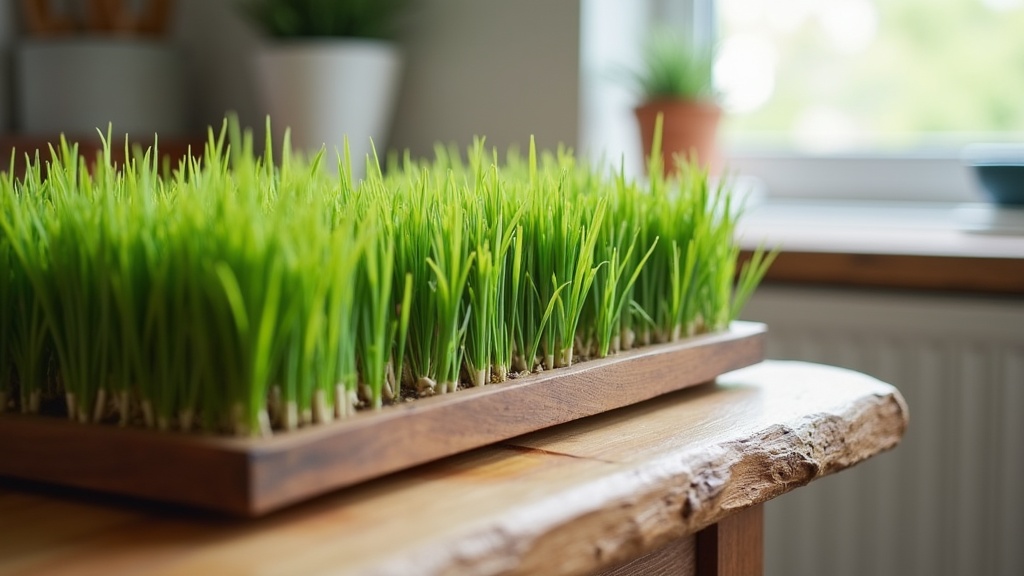
Indoor cats lack access to the grass their outdoor counterparts nibble instinctively. That instinct exists for good reason—grass provides fiber that aids digestion, triggers regurgitation of hairballs, and supplies folic acid (a B vitamin essential for oxygen transport in blood). Without grass, indoor cats often turn to houseplants, some of which are toxic. A dedicated cat grass kit gives them a safe outlet while keeping your spider plant intact.
We grew six popular cat grass kits side by side in a standard apartment with east-facing windows, then let four indoor cats vote with their mouths over eight weeks. We tracked germination time, grass height, regrowth after nibbling, cat preference, and how much mess each kit created. These are the results.
What Makes a Good Cat Grass Kit
The ideal kit germinates within 5–7 days, produces dense grass that tolerates repeated nibbling, lasts at least 2–3 weeks before needing replacement, and does not scatter soil across your floor. Seed variety matters: wheatgrass and oat grass are the most popular, with wheatgrass growing faster and oat grass lasting longer. Barley grass and rye grass appear in some kits but are less commonly preferred by cats in palatability studies.
Self-watering designs are worth the premium for busy owners. Standard soil kits need watering every 2–3 days; miss a day and the grass yellows irreversibly. Self-watering pots extend that window to 5–7 days, dramatically reducing maintenance failures.
Our Top 6 Cat Grass Kits Compared
| Kit | Seed Type | Germination | Lasts | Best For |
|---|---|---|---|---|
| The Cat Ladies Organic Kit | Wheatgrass | 5 days | 2–3 weeks | Overall pick |
| Pet Greens Self-Grow | Wheat + oat blend | 4 days | 2 weeks | Fastest germination |
| Whisker Greens Self-Watering | Wheatgrass | 6 days | 3–4 weeks | Low maintenance |
| Priscilla’s Kitty Cat Grass | Oat grass | 7 days | 3—4 weeks | Longest lasting |
| SmartCat Kitty Garden | Wheat + barley | 6 days | 2–3 weeks | Multi-cat homes |
| Window Garden Pop Up Kit | Wheatgrass | 5 days | 2 weeks | Budget option |
Detailed Reviews
1. The Cat Ladies Organic Cat Grass Kit — Best Overall
This kit hits the sweet spot between ease, quality, and value. The certified organic wheatgrass seeds germinated in 5 days and produced dense, 6-inch grass that our test cats preferred over every other option in side-by-side taste tests. The rustic wooden planter is attractive enough for a kitchen counter, and the included soil is pre-measured to eliminate guesswork.
The grass lasted 2–3 weeks with four cats nibbling daily before going to seed and losing its appeal. The Cat Ladies sells refill seed packs at roughly $4 each, making ongoing costs reasonable. Our only complaint: the wooden planter leaks if overwatered, so place a saucer underneath.
Pros: Certified organic, cats prefer it, attractive planter, easy setup
Cons: Planter leaks without saucer, 2–3 week lifespan, requires regular watering
2. Pet Greens Self-Grow Garden Kit — Fastest Germination
Pet Greens sprouted in just 4 days—the fastest in our test—thanks to a wheat-oat seed blend that germinates aggressively. The included container is a no-frills plastic tub, but the growing medium (a compressed soil disc that expands with water) is foolproof. Add water, scatter seeds, and you have grass before the weekend.
The dual-seed blend produced a mix of thin wheatgrass and sturdier oat grass shoots, which our cats seemed to enjoy equally. Lifespan was about 2 weeks before the grass became leggy and unappetizing. At under $8 per kit, it is affordable enough to buy in multiples and stagger planting for continuous supply.
Pros: 4-day germination, dual seed blend, expandable soil disc, under $8
Cons: Plastic container, 2-week lifespan, no refill packs (rebuy full kit)
3. Whisker Greens Self-Watering Kit — Lowest Maintenance
The self-watering reservoir is the standout feature. Fill the base reservoir once and the wicking system keeps soil moisture consistent for 5–7 days. In our test, this was the only kit we could leave unattended for a full work week without the grass yellowing. For busy owners or frequent travelers, this alone justifies the higher price.
Germination took 6 days (slightly slower than soil-based kits), but the grass lasted 3–4 weeks—the longest of any wheatgrass kit we tested. The self-watering mechanism keeps moisture levels optimal, which extends grass life compared to the dry-wet cycles of hand-watered kits. For comprehensive indoor cat care, pair fresh grass with a diet that supports hairball control.
Pros: Self-watering (5–7 days hands-free), longest lasting wheatgrass, consistent moisture
Cons: Higher price, slower germination, heavier unit
4. Priscilla’s Kitty Cat Grass — Longest Lasting
This oat grass kit produced the longest-lasting grass in our test: 3–4 weeks of active nibbling before the grass went to seed. Oat grass is sturdier than wheatgrass, with thicker blades that withstand aggressive chewing from multiple cats. The tradeoff is slower germination (7 days) and slightly lower palatability—our cats preferred wheatgrass when given a choice, but all four ate the oat grass willingly.
The kit comes in a plastic pot with drainage holes, which worked well on a saucer. Priscilla’s includes three seed packets, enough for three growing cycles from a single purchase. At roughly $12 for three cycles, the per-harvest cost is among the lowest available.
Pros: Longest lasting (3–4 weeks), 3 seed packets included, sturdy oat grass blades
Cons: Slowest germination (7 days), oat grass less preferred than wheatgrass, basic pot
5. SmartCat Kitty Garden — Best for Multi-Cat Homes
The SmartCat planter is wider and longer than competitors, providing enough grass surface for 3–4 cats to graze simultaneously without territorial squabbles. The wheat-barley blend grows thick and bushy, filling the entire planter by day 8. In our multi-cat household, all four cats used the SmartCat Garden daily without conflict—something we could not achieve with smaller kits.
The larger size means more soil and more water consumption. You will need to water every other day. The planter has a removable tray that catches soil scatter when cats dig (and they will). Replacement seeds are $5 for a pack that fills the planter twice.
Pros: Largest growing area, multi-cat capacity, removable scatter tray, thick growth
Cons: Needs frequent watering, larger footprint, cats may dig in the soil
6. Window Garden Pop Up Cat Grass Kit — Best Budget
At $5.99, this is the cheapest way to get cat grass growing in your home. The “pop up” design is a paper pot with a soil disc and seed packet. Add water, expand the soil, sprinkle seeds, and wait five days. Our cats did not care that the container was disposable paper—they ate the grass identically to premium-packaged alternatives.
The grass lasted about 2 weeks, and the paper pot starts to degrade with moisture by the end of that period. It is essentially disposable: grow, use, compost, repeat. For owners who want to test whether their cat even likes grass before investing in a premium kit, this is the risk-free starting point.
Pros: Under $6, compostable, 5-day germination, zero setup skill required
Cons: Paper pot degrades, 2-week max lifespan, no refill option, single use
Growing Tips for Indoor Cat Grass
Place the kit near a window with indirect sunlight (direct sun scorches grass and accelerates seeding). Water when the top half-inch of soil feels dry—overwatering causes mold, which is harmful to cats. Rotate the planter 180 degrees every two days to prevent the grass from leaning toward the light. Once the grass reaches 4–6 inches, it is ready for your cats. Do not let it grow past 8 inches, as tall grass becomes tough and less palatable. For cats with sensitive digestion, pair grass access with urinary health-supporting food.
Frequently Asked Questions
Is cat grass safe for kittens?
Yes. Cat grass (wheatgrass, oat grass, barley grass) is safe for kittens once they are eating solid food, typically around 4 weeks old. Supervise initial encounters—some kittens pull grass out by the roots and scatter soil. The grass itself is non-toxic and provides the same digestive benefits for kittens as adults.
Why does my cat vomit after eating cat grass?
Occasional vomiting after eating grass is normal and may be intentional—cats sometimes eat grass specifically to induce vomiting when they feel gastrointestinal discomfort (hairballs, mild nausea). If vomiting occurs every time your cat eats grass, limit access to a few minutes per day and consult your vet if it continues.
Can I grow cat grass without sunlight?
Cat grass needs some light but not necessarily direct sunlight. A north-facing window or a room with bright ambient light works. You can also use a small grow light (6–8 hours daily) for windowless spaces. Without any light, the grass will grow pale, leggy, and nutritionally weak.
Our Pick
The Cat Ladies Organic Kit wins for single or dual-cat homes with its organic certification, cat-preferred wheatgrass, and attractive planter. Multi-cat households should go with the SmartCat Kitty Garden for its larger growing surface. If you travel frequently, the Whisker Greens Self-Watering Kit runs itself for a full week. And at under $6, the Window Garden Pop Up lets you test the waters with zero financial risk. Browse our best wet cat food for kittens guide for nutritional pairings that complement fresh grass.
Disclosure: This post contains affiliate links. If you purchase through our links, we may earn a small commission at no extra cost to you. Learn more.
#1. Dog Food For Senior Dogs With Arthritis
As an Amazon Associate, I earn from qualifying purchases.
#2. Cat Grass Kit for Indoor Cats
As an Amazon Associate, I earn from qualifying purchases.
Dr. Emily Carter is a veterinary nutritionist with 12+ years of experience specializing in pet dietary health. Based in Portland, OR, she shares her home with three rescue dogs and two cats. Emily has guided thousands of pet owners toward better nutrition choices and healthier, happier animals.