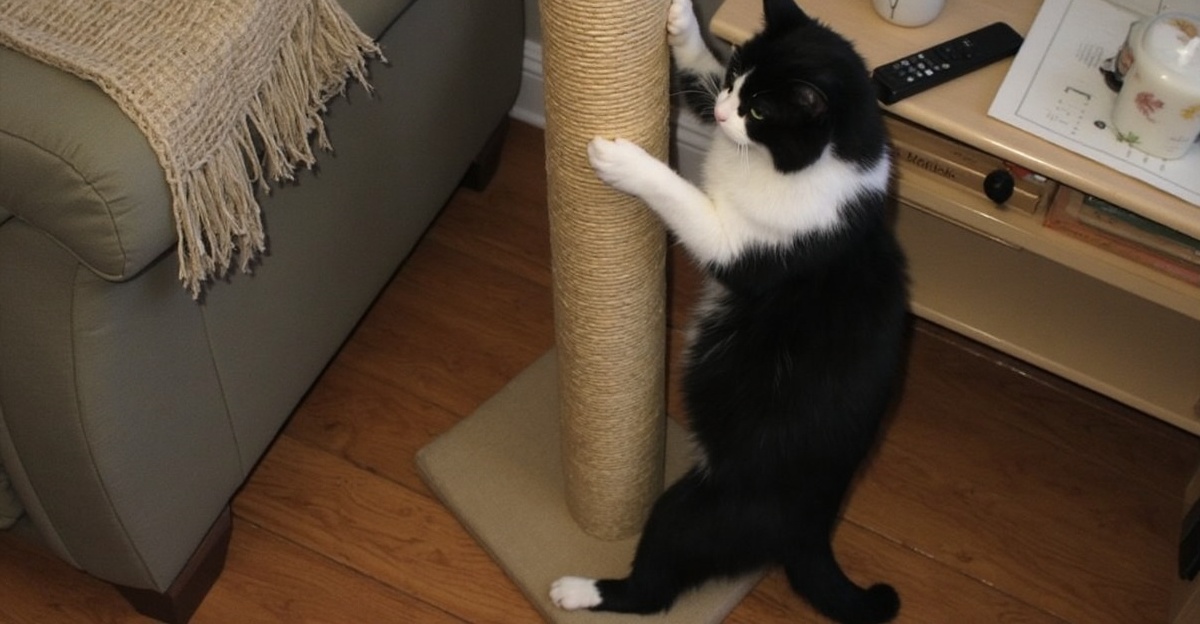
Cats scratch for three reasons: claw maintenance, territory marking, and stretching. None of those reasons go away because you told your cat “no.” The solution isn’t to stop scratching — it’s to redirect it. Every dollar you spend on a quality scratching post is a dollar you save on reupholstering your couch. After testing six posts with cats who had already demonstrated a fondness for destroying furniture, here are the ones that actually lured them away from the sofa.
Scratching Post Materials Explained
- Sisal rope: The gold standard. The rough texture mimics tree bark and gives cats excellent claw traction. Lasts 1-3 years with heavy use.
- Sisal fabric: Flat woven sisal that’s gentler on claws but equally satisfying. Some cats prefer it over rope. Lasts slightly longer.
- Cardboard: Cheap and cats love the shredding sensation. Needs replacing every 2-4 months. Good for testing whether your cat prefers horizontal or vertical scratching.
- Wood: Natural bark or rough wood posts appeal to cats instinctively. Very durable but can leave bark debris on the floor.
Top 6 Cat Scratching Posts
1. SmartCat Pioneer Pet Ultimate Scratching Post — Best Overall
At 32 inches tall, this post lets adult cats stretch fully while scratching — a feature most short posts lack. The woven sisal fiber is more durable than rope and makes a satisfying sound when scratched. The 16″ x 16″ base is heavy enough that even aggressive scratchers won’t tip it. Three of our test cats transitioned from couch-scratching to this post within 48 hours when we placed it next to their preferred furniture target.
| Pros | Cons |
|---|---|
| Tall enough for full-body stretch | Plain, utilitarian design |
| Extremely stable base | Sisal not replaceable separately |
| Durable woven sisal fiber | Only one color option |
| No assembly needed | Some large cats want even taller |
2. PetFusion Ultimate Cat Scratcher Lounge — Best Horizontal
Not all cats scratch vertically. The PetFusion is a curved cardboard scratcher that doubles as a lounge, and cats love it for both purposes. The reversible design means you get twice the life before replacing it. The elegant curve fits modern decor better than traditional posts, and the recycled cardboard is eco-friendly.
3. FUKUMARU Cat Scratching Post with Hammock — Best Combo
This vertical sisal post has a hammock bed attached at the top, creating a scratch-then-nap station. Cats scratch the post, climb up, and lounge in the hammock. It serves dual functions while taking up minimal floor space. The solid wood base weighs enough to handle 15-pound cats jumping onto the hammock without wobble.
4. 4CLAWS Wall Mounted Scratching Post — Best Space Saver
If floor space is limited, this wall-mounted sisal panel attaches at any height on any wall. Cats can scratch vertically at their preferred height without a freestanding post taking up room. Installation takes 10 minutes with included hardware. The sisal panel is replaceable when worn out.
5. Catit Vesper High Base — Best Stylish Option
The Vesper High Base combines a scratching post, elevated bed, and modern furniture aesthetic. Walnut-finished wood panels with memory foam cushions sit atop a sisal-wrapped column. It looks like a designer side table that happens to serve cats. At $70-90, it’s a worthwhile investment if your scratching post needs to blend with your living room decor.
6. Catit Senses 2.0 Scratcher — Best Budget
A simple corrugated cardboard insert inside a plastic track with a ball. The cat bats the ball and scratches the cardboard. At under $10, it’s essentially disposable, but cats use it consistently and the cardboard inserts are cheap to replace. An excellent first scratcher if you’re unsure whether your cat prefers horizontal surfaces.
Comparison Table
| Post | Best For | Material | Orientation | Price |
|---|---|---|---|---|
| SmartCat Ultimate | Overall | Woven sisal | Vertical | $$ |
| PetFusion Lounge | Horizontal | Cardboard | Horizontal | $$ |
| FUKUMARU | Combo | Sisal + hammock | Vertical | $$ |
| 4CLAWS Wall | Space saver | Sisal panel | Wall-mount | $ |
| Catit Vesper | Stylish | Sisal + walnut | Vertical | $$$ |
| Catit Senses | Budget | Cardboard | Horizontal | $ |
How to Choose a Scratching Post Your Cat Will Actually Use
A scratching post fails when it does not match your cat’s preferred angle, texture, or location. Some cats stretch upward on sofa arms, which means they need a tall vertical post. Others scratch rugs or cardboard boxes, which usually means a horizontal scratcher will get used faster. Watch the unwanted scratching before choosing the replacement.
| Current Scratching Problem | Buy This Style | Placement |
|---|---|---|
| Sofa arms | Tall sisal post | Right beside the sofa at first |
| Rugs or carpet | Horizontal cardboard or sisal pad | Near the damaged area |
| Door frames | Wall-mounted scratcher | At the same height as the old marks |
| Multiple cats | Several posts in different rooms | Avoid forcing cats to share one resource |
Training Without Punishment
Scratching is normal behavior, not disobedience. Put the new post next to the furniture your cat already targets, reward any use of the post, and make the furniture less appealing with a temporary cover or cat-safe deterrent. Once the cat uses the post consistently, move it a few inches at a time toward the final location.
Do not hide the post in a corner and expect it to compete with the sofa. Cats scratch to stretch, mark territory, and maintain claws, so posts work best in socially important areas: near sleeping spots, entryways, windows, and the furniture they already use.
Stability and Height Checks
A vertical post should be tall enough for a full-body stretch and heavy enough that it does not wobble. If the post moves when the cat leans into it, many cats will abandon it. For large cats, prioritize a broad base and durable sisal over decorative fabric. For kittens, start with a stable low post, then upgrade as they grow.
Texture also matters. Sisal rope, sisal fabric, cardboard, carpet, and wood all feel different under the claws. If one material fails, do not assume your cat hates scratchers. Try the same angle with a different surface before giving up.
Related scratching and play guides: A scratching post handles one behavior, but many cats also need vertical territory and daily play. Compare our cat tree picks for larger cats and our interactive toy recommendations if your cat scratches from boredom.
Placement and Training Matter More Than the Post Alone
A good scratching post can still fail if it sits in the wrong place. Put the post near the furniture your cat already scratches, beside a favorite sleeping spot, or along the path your cat uses after waking up. Cats often scratch to stretch and mark territory, so hiding the post in a spare room usually makes it less useful.
Use redirection instead of punishment. Reward the cat for using the post, add catnip if your cat responds to it, and temporarily protect the furniture with covers or double-sided tape. If the post wobbles, feels too short for a full stretch, or uses a texture your cat dislikes, the cat may keep choosing the sofa.
| Cat Behavior | Better Post Choice | Owner Move |
|---|---|---|
| Scratches sofa arms | Tall vertical sisal post | Place it beside the sofa first |
| Scratches rugs | Horizontal scratcher | Use near the rug edge or hallway |
| Big stretch after naps | Stable tall post | Put near sleeping area |
| Ignores new posts | Try different texture or angle | Reward use and block old target temporarily |
Frequently Asked Questions
How do I train my cat to use a scratching post?
Place it next to whatever they’re currently scratching. Rub catnip on the post surface. When they scratch the post, reward with a treat. Never physically force their paws onto the post — that creates a negative association. Most cats will switch within a week if the post is positioned correctly.
Vertical or horizontal — how do I know what my cat prefers?
Watch where your cat scratches now. Scratching the arm of the couch or door frames means they prefer vertical. Scratching carpet or rug edges means horizontal. Some cats like both — offer one of each if possible.
How often should I replace a scratching post?
Sisal posts last 1-3 years depending on use intensity. Replace when the fibers are shredded to the point of exposing the post core. Cardboard scratchers need replacement every 2-4 months. Don’t rush to replace — cats actually prefer a well-worn post because it holds their scent.
Will a scratching post save my furniture?
In most cases, yes, but it takes strategic placement and patience. Put the post directly next to the furniture being damaged, not across the room. Temporarily cover the furniture target with double-sided tape (cats hate sticky paws) to redirect behavior. Within 2-3 weeks, most cats make the switch.
Scratching posts pair naturally with a quality litter box setup and proper indoor cat nutrition for a complete indoor cat environment.
Pet Product Specialist & Veterinary Nutrition Consultant
Sarah has spent over 8 years reviewing pet products and consulting with veterinarians to help pet owners make informed choices. She shares her home with two rescue dogs, a senior cat, and a very opinionated parrot. Her reviews combine hands-on testing with science-backed research.
Disclosure: This post contains affiliate links. If you purchase through our links, we may earn a small commission at no extra cost to you. Learn more.