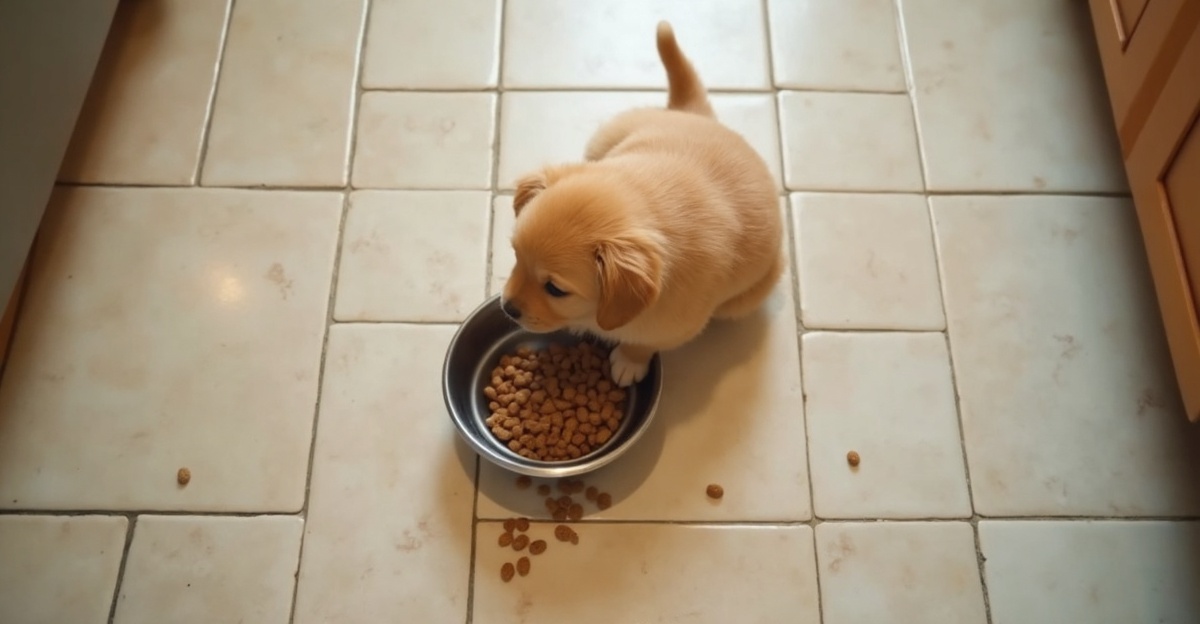
A puppy’s first year of nutrition shapes everything that follows — bone density, immune function, cognitive development, even temperament. Feed the wrong formula and you’re looking at growth abnormalities, digestive disasters, and vet bills that dwarf whatever you saved on cheap kibble. Feed the right one and you’ve laid the foundation for 12-15 years of health.
Puppy food isn’t just smaller kibble. It’s a fundamentally different nutritional profile: higher protein for muscle development, more calcium and phosphorus for bones, DHA for brain growth, and calorie density calibrated for metabolisms running at twice the adult rate. We evaluated dozens of formulas and narrowed it down to five that veterinary nutritionists actually recommend.
Puppy Food vs. Adult Food: Why It Matters
Puppies have specific nutritional requirements that adult food doesn’t meet:
- Protein: Puppies need 22-32% protein (vs. 18-25% for adults) for muscle and tissue development.
- Fat: 8-20% fat provides concentrated energy for growth without overfeeding volume.
- Calcium/Phosphorus: Precise ratios (1.2:1 to 1.5:1) are critical. Too much calcium causes skeletal problems in large breeds; too little weakens bones in all breeds.
- DHA: This omega-3 fatty acid supports brain and eye development. Puppies fed DHA-enriched food score higher in trainability assessments.
Top 5 Puppy Foods of 2026
1. Hill’s Science Diet Puppy — Best Overall
Hill’s has earned the #1 vet recommendation for puppy food through decades of clinical research and feeding trials. The formula delivers optimal DHA from fish oil for brain development, a precisely balanced calcium-to-phosphorus ratio for controlled bone growth, and high-quality chicken as the primary protein source.
What separates Hill’s from the pack is the feeding trial validation. This formula has been tested on actual puppies with documented growth outcomes — not just analyzed in a lab for nutrient levels. The difference matters because nutrient availability (how much your puppy actually absorbs) varies wildly between formulas that look identical on paper.
| Pros | Cons |
|---|---|
| #1 vet-recommended puppy food | Premium price point |
| Feeding trial validated (not just formulated) | Only chicken flavor |
| Optimal DHA for brain and eye development | Contains grain (by design for nutrition) |
| Precise Ca:P ratio for safe bone growth | Smaller bag sizes only |
2. Royal Canin Puppy — Best for Breed-Specific Needs
Royal Canin takes breed-specific nutrition further than any competitor. Their puppy line includes formulas for small, medium, and large breeds, each with tailored kibble sizes, nutrient profiles, and calorie densities. The medium puppy formula (for dogs reaching 23-55 lbs at maturity) includes a patented antioxidant complex and highly digestible proteins that reduce stool volume and digestive upset during the sensitive first year.
3. Purina Pro Plan Puppy — Best for Active Breeds
If your puppy is a bundle of chaos that never stops moving, they need more concentrated energy without more food volume. Purina Pro Plan Puppy delivers 28% protein and 18% fat — both at the higher end of the puppy range — with real chicken as the first ingredient. The formula includes live probiotics for digestive health and DHA from omega-rich fish oil.
4. Blue Buffalo Life Protection Puppy — Best Natural
Blue Buffalo’s puppy formula appeals to owners who want recognizable, natural ingredients without by-products or artificial additives. Deboned chicken leads the list, followed by brown rice, oatmeal, and barley — all gentle carbohydrate sources that support steady energy release. The LifeSource Bits contain a concentrated blend of antioxidants and vitamins processed at lower temperatures to preserve nutritional integrity.
5. Diamond Naturals Puppy — Best Value
Premium puppy nutrition at a working-class price. Diamond Naturals uses cage-free chicken as the primary protein, delivers DHA for brain development, and includes proprietary K9 Strain probiotics that survive better than generic cultures. At roughly $1 per pound, it’s half the cost of Hill’s and Royal Canin while still meeting AAFCO puppy growth standards.
Puppy Food Comparison
| Brand | Protein | Fat | DHA | Best For | Price |
|---|---|---|---|---|---|
| Hill’s Science Diet | 24.5% | 15.5% | Yes | Overall | $$$ |
| Royal Canin | 28% | 16% | Yes | Breed-specific | $$$$ |
| Purina Pro Plan | 28% | 18% | Yes | Active breeds | $$$ |
| Blue Buffalo | 26% | 15% | Yes | Natural ingredients | $$$ |
| Diamond Naturals | 27% | 15% | Yes | Budget pick | $$ |
How to Match Puppy Food to Growth Stage
Puppy food is not only about higher calories. Puppies need the right balance of protein, fat, calcium, phosphorus, and digestibility for their expected adult size. Large-breed puppies are especially sensitive because too much energy or the wrong mineral balance can support growth that is too fast for their joints.
Look for a food labeled for growth or all life stages, and check whether it is appropriate for large-breed puppies if your dog will be big as an adult. Toy and small breeds may need smaller kibble and more frequent meals because they have tiny stomachs and can burn energy quickly.
| Puppy Type | Food Priority | Watch Out For |
|---|---|---|
| Toy and small breed | Small kibble and steady meals | Skipping meals or oversized kibble |
| Medium breed | Balanced growth formula | Overfeeding because the puppy seems hungry |
| Large breed | Large-breed puppy formula | Too much calcium or rapid weight gain |
| Sensitive stomach | Simple formula and slow transition | Changing foods repeatedly in one week |
Transition and Feeding Mistakes to Avoid
Switch foods slowly over about a week unless your veterinarian gives a different plan. Start with mostly the old food, then gradually increase the new food. Loose stool after a food change does not always mean the food is bad; it can also mean the transition was too fast.
Use the feeding chart as a starting point, not a rule. Adjust based on body condition, stool quality, growth rate, treats, and activity. If your puppy is losing weight, growing too fast, vomiting, refusing food, or having repeated diarrhea, get veterinary guidance instead of cycling through random formulas.
Frequently Asked Questions
When should I switch from puppy food to adult food?
Small breeds (under 20 lbs): 9-12 months. Medium breeds (20-50 lbs): 12-14 months. Large breeds (50+ lbs): 14-18 months. Giant breeds (90+ lbs): 18-24 months. The transition should happen when your dog reaches approximately 80% of their expected adult weight. Switching too early deprives growing bodies of necessary nutrients.
How much should I feed my puppy?
Puppies 8-12 weeks: 3-4 meals per day. 3-6 months: 3 meals per day. 6-12 months: 2 meals per day. Follow the feeding guidelines on your chosen food as a starting point, then adjust based on body condition. You should be able to feel your puppy’s ribs without pressing hard, but not see them prominently.
Is grain-free puppy food safe?
The FDA has investigated a possible link between grain-free diets and dilated cardiomyopathy (DCM) in dogs. Until more research clarifies the relationship, most veterinary nutritionists recommend grain-inclusive puppy food unless your puppy has a diagnosed grain allergy. Grains like rice and oatmeal provide beneficial fiber and nutrients.
Can I give my puppy adult dog food if I run out?
For a day or two in an emergency, adult food won’t harm your puppy. But don’t make it a habit. Puppy food contains 22-32% more protein and specific calcium-to-phosphorus ratios that adult food lacks. Prolonged feeding of adult food during the growth phase can lead to nutritional deficiencies.
The Bottom Line
Start with Hill’s Science Diet Puppy — it’s the most thoroughly validated formula on the market and the one your vet is most likely to recommend. If budget is a concern, Diamond Naturals Puppy delivers solid nutrition at half the price. For large or giant breed puppies, make sure you’re using a breed-appropriate formula (Royal Canin excels here) with controlled calcium levels to prevent growth disorders.
Shop Best Puppy Food on Amazon
Related reading: Best Dog Food for Sensitive Stomach 2026 | Best Dog Toys for Aggressive Chewers 2026
Disclosure: This post contains affiliate links. If you purchase through our links, we may earn a small commission at no extra cost to you. Learn more.